Who we work with

Different buildings, different failure points.

What a system has to survive changes completely between a family home and a factory. These are the patterns we see, and what we install for each.

Homes and estates

Quiet nights, and a fridge that never warms up.

Most households do not need the whole house on backup — they need the right half of it, for long enough. We separate essential circuits from heavy loads, which usually doubles the hours you get for the same spend, and size the battery around the evening rather than around the array.

For estates, we install to a single specification across units so that spares, servicing and fault-finding stay simple, and so residents are not each negotiating separately with a different installer.

  • 2.5–10 kVA whole-house and essential-load systems
  • Lithium retrofits onto existing inverters
  • Borehole and pumping-set integration
  • Estate-wide standards, with matched equipment across units
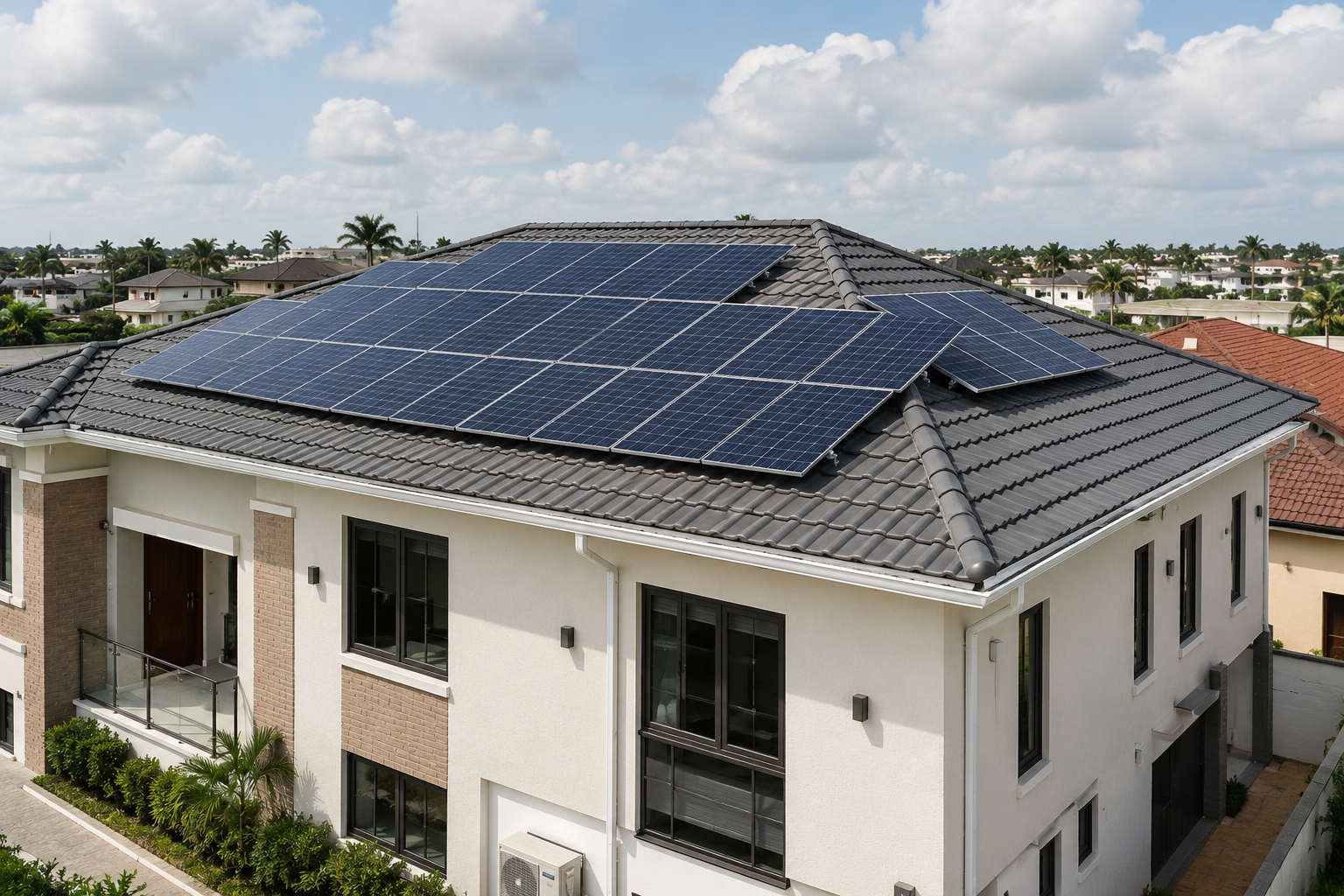
Solar array on a residential roof
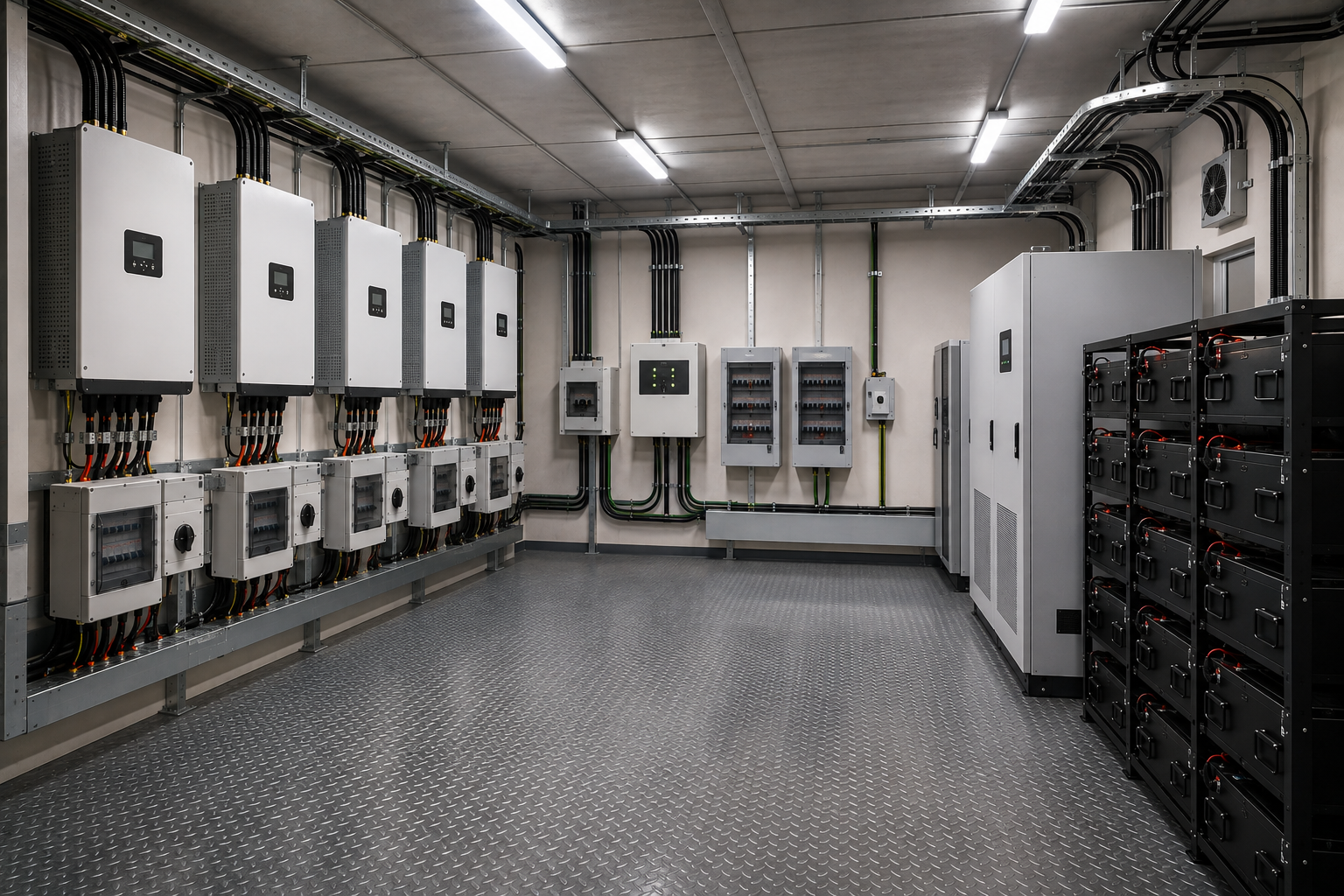
Commercial inverter plant room

Offices, shops and commercial buildings

The cost is the generator, and everybody knows it.

A commercial building's diesel bill is usually treated as a fixed cost of trading. It is not fixed — it moves with the pump price, and it carries servicing, overhaul and downtime behind it. A hybrid system moves the generator from daily service to genuine standby.

Work in a trading premises has to happen without closing it. We phase the installation so that the parts of the building in use stay in use, and we do the noisy and disruptive work outside business hours where that is what it takes.

  • 5–45 kW systems for single premises, branches and multi-tenant buildings
  • POS, server, CCTV and cold-storage circuits identified and protected
  • Generator integration and run-hour reduction
  • Installation phased around trading hours

Industrial and manufacturing

Motive load is a different problem.

Factories and workshops are dominated by motors, compressors and pumps — loads with high starting currents that punish an undersized inverter and a badly designed board. Sizing here is about surge behaviour and duty cycle, not just kilowatt-hours.

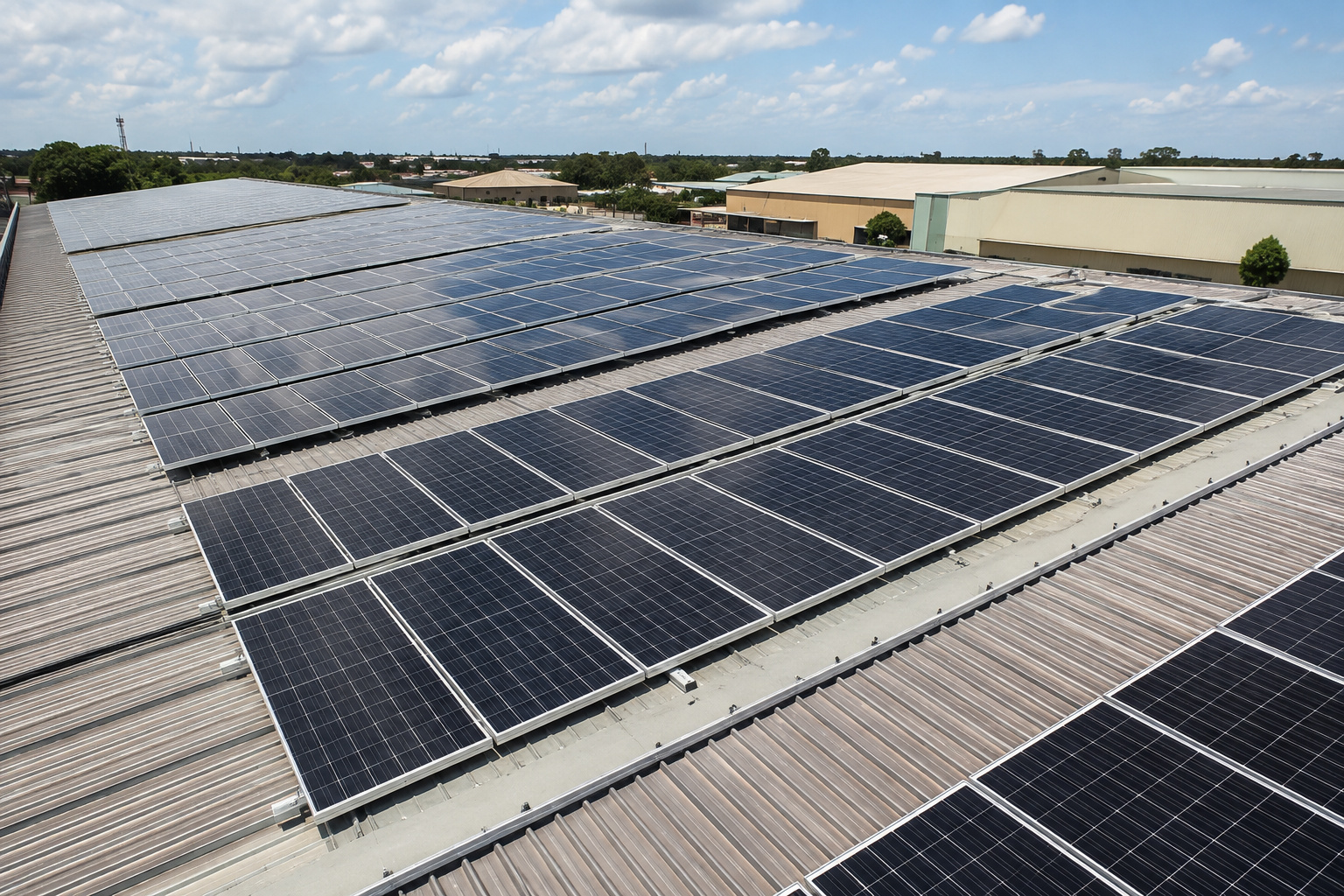
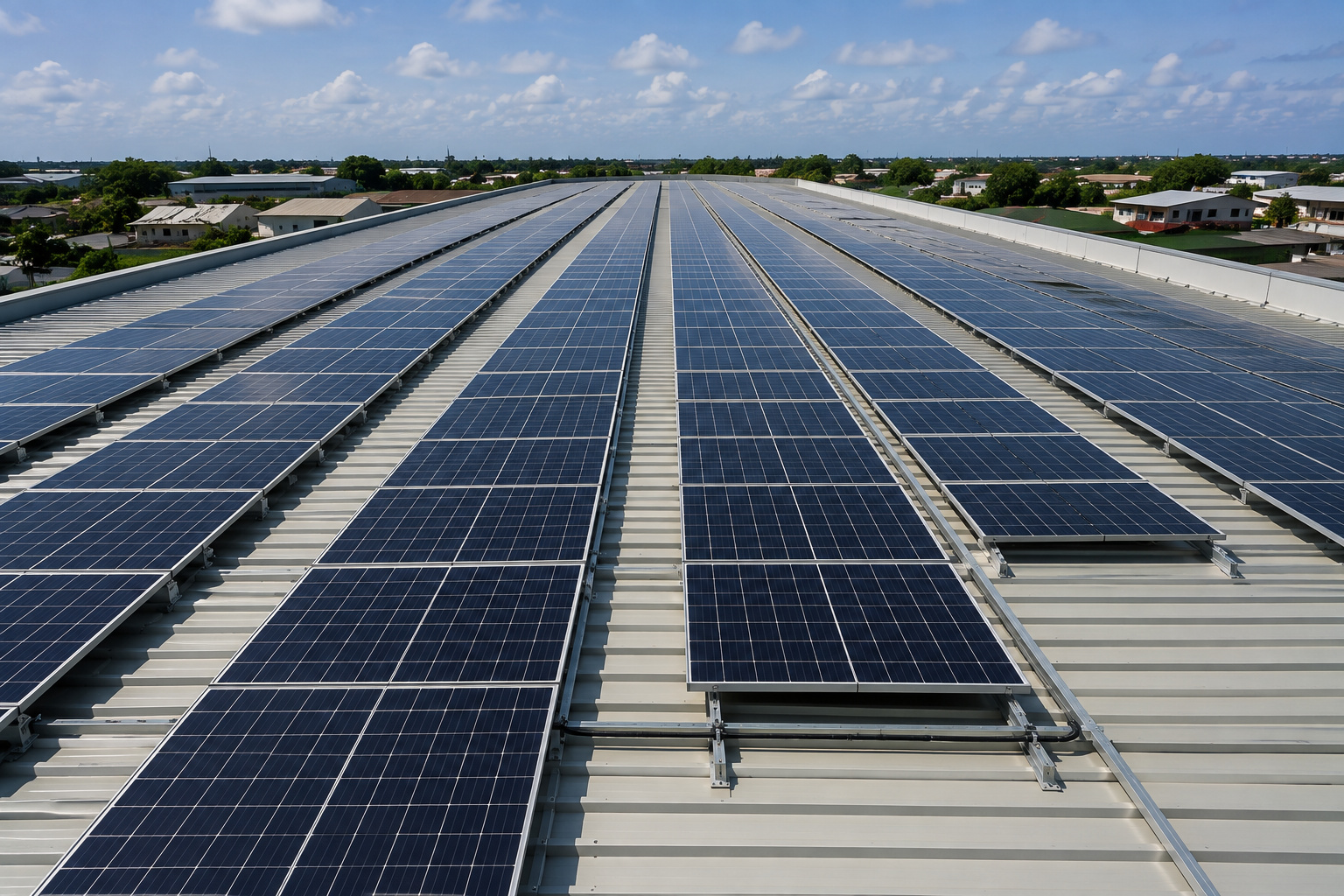
Industrial roofs are usually the best asset on the site: large, unobstructed long-span or profile-sheet surfaces that take an array cleanly, with mounting designed around the existing sheet line so the roof covering is not compromised.

  • Long-span and profile-sheet roof mounting, and ground-mount alternatives
  • Sizing for motor starting current and duty cycle, not average draw
  • Three-phase configurations and phase-balancing
  • Daytime process load carried by the array, with storage for critical circuits
Solar array across an industrial roof
Array installed on a pitched roof

Schools, clinics and places of worship

Budgets that are raised, not borrowed.

Institutions are usually spending money that was contributed rather than earned, and the system has to be defensible to whoever gave it. We quote in a form that a committee can read: every item, every quantity, every rate, and a clear statement of what is not included.

These buildings also tend to have concentrated, predictable demand — a clinic's cold chain and theatre, a school's daytime classrooms, a church's weekend peak — which is exactly the kind of profile solar suits well.

  • Phased deployment where the budget arrives in stages
  • Cold-chain and critical-care circuits given dedicated backup
  • Daytime-dominant profiles sized to run largely off the array
  • Training for in-house maintenance staff at handover

Multi-storey and corporate buildings

Installed floor by floor, in an occupied building.

In multi-floor buildings we install per floor rather than centrally. Each floor gets its own inverter capacity, storage and share of the array, tied through a transfer switch into that floor's distribution. Floors operate independently, so a fault or a maintenance shutdown on one does not take the building down.

It also means the work can proceed a floor at a time, with two crews on separate floors, while the building stays occupied and trading. Roof area is usually the binding constraint rather than budget, which is why siting is settled before anything is ordered.

  • Per-floor inverter, storage and array allocation with independent operation
  • Two-crew phased installation in occupied premises
  • Roof, ground, canopy and façade options where roof area is short
  • As-built drawings, O&M manuals and operator training at handover
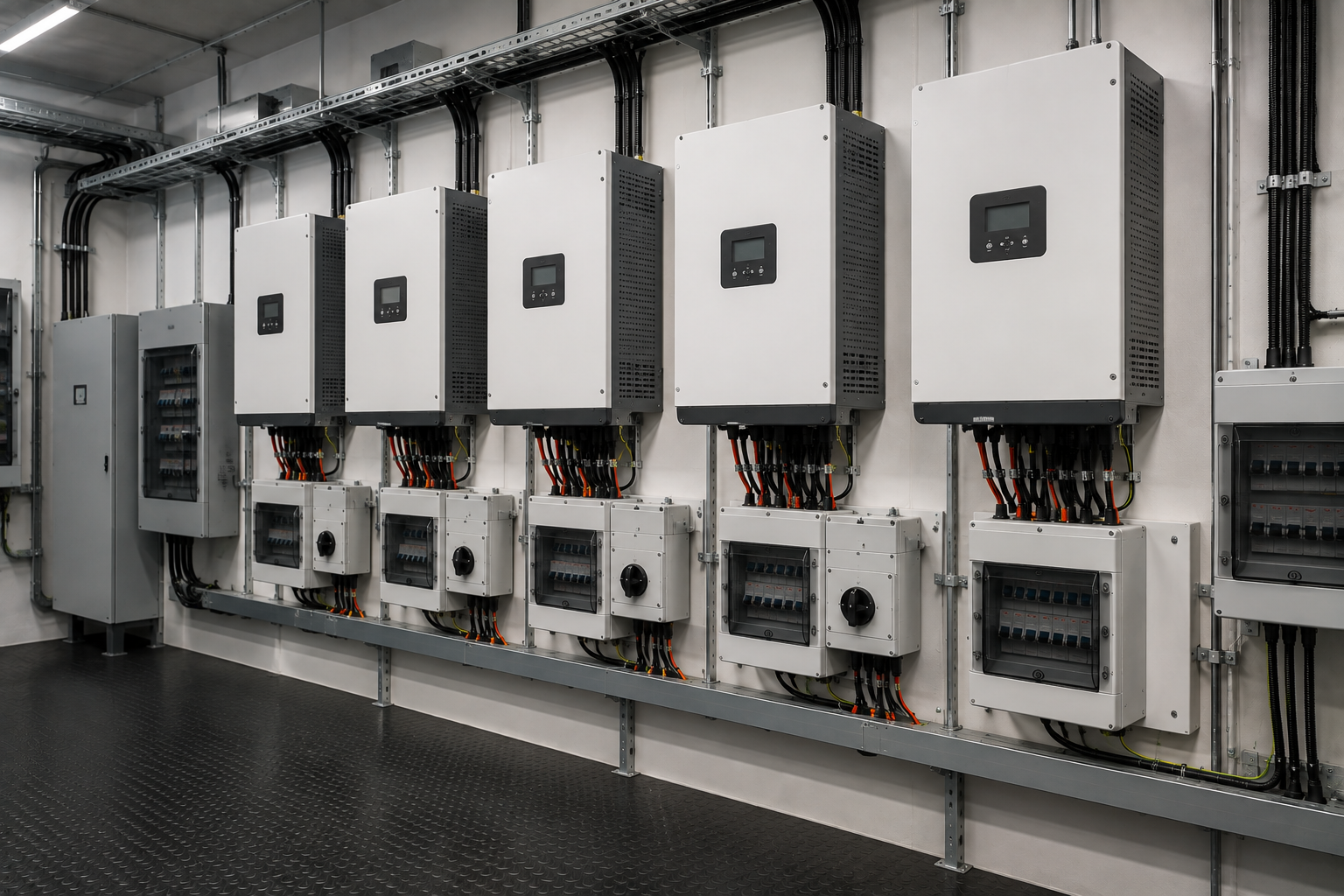
Bank of parallel inverters with hybrid storage

Tell us what you need powered.

A site visit and a written quotation cost you nothing. You will get a real load assessment, a system sized to it, and a price with every item listed — not a lump sum.